Transit Mobile Application Design Update for Atlanta's MARTA
Led UX design and research for a transit platform serving a network with ~5.9 million boarding/month with features NOW LIVE on latest Breeze Mobile App.
PROJECT DETAILS
Company
Metropolitan Atlanta Rapid Transit Authority
Tools
Figma, Qualtrics, Excel
Timeline
Aug 2024 - Dec 2024
Role
UX Design Lead, Developer & Researcher
Team
2 UX Researchers + 2 UX Designers
THE PROBLEM
Atlanta's transit experience is a puzzle confusing users with multiple apps for multiple reasons.
There needs to be a streamlined experience before the world's biggest games, the FIFA World Cup heads to Atlanta.
Back in 2024, Atlanta was looking forward to hosting 8 matches and 1 semi-final during the FIFA World Cup in 2026, welcoming an estimated 3.5M+ visitors, many navigating the city and its transit system for the first time. The stakes were high.
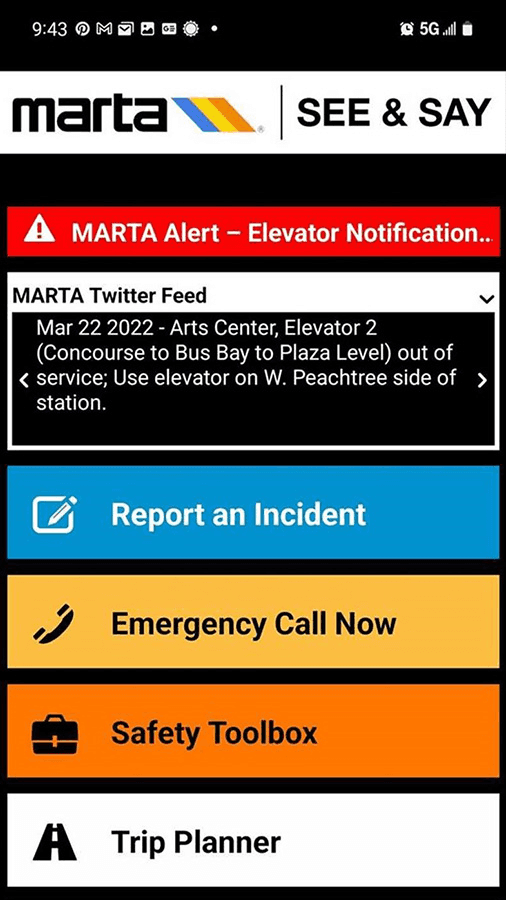
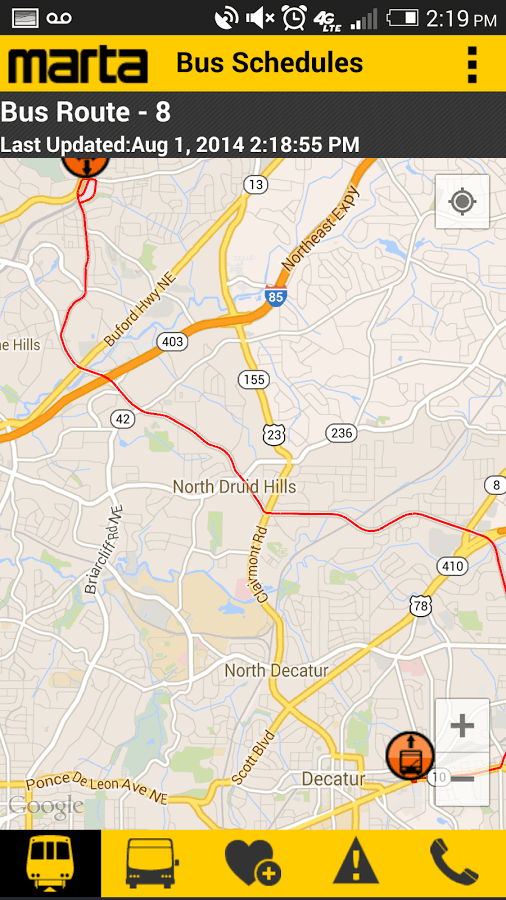


But, MARTA's digital experience is currently split across 3 disconnected tools, serving 3 different purposes.
One for ticketing.
One for navigation.
One for safety.
But as history has shown users need one single source of information for easier navigation.
Therefore, the team set out on a journey to solve the following problem statement:
How might we develop an all-encompassing platform to incentivize and encourage MARTA use during the 2026 FIFA World Cup?
THE VALUE I DELIVERED
I led the design of a unified platform that bridges the gap between MARTA’s infrastructure and a traveler’s actual needs.
For the system

3 apps → 1 unified platform → 89% heuristic score
For MARTA

Built for 3.5M+ visitors, positioning MARTA as default transit choice
For the users

Group-first, goal-driven navigation
Simpler ticketing
THE SOLUTION
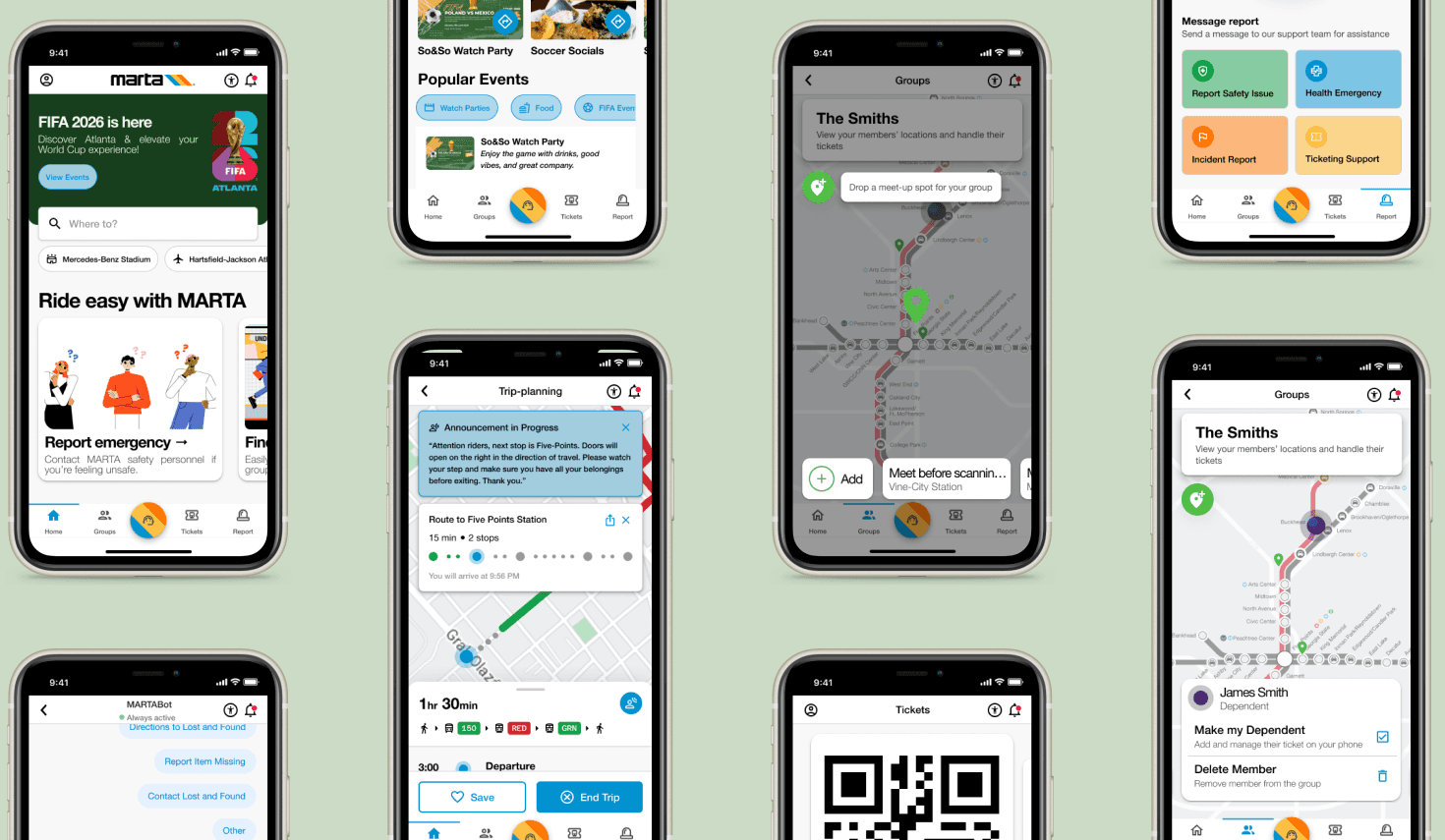
The app streamlines the journey of a traveler, focusing on intuitive and task-based navigation as well as safety features.
Home Page:
Discover & navigate key tourist hotspots with quick-access features
Stay informed with service and facility alerts available on every page
Get instant support via MARTABot for FAQs and real-time assistance
Trip-Planning:
Plan trips faster using recent searches and favorite destinations
Customize routes with accessibility and minimal walking preferences
Track trips in real time with live arrivals and route-level alerts
Access announcements through automated transcription
Group Navigation:
Join and create groups while viewing the locations of members
Make members of your group your dependent to handle their tickets
Add meet-up spots for you and your group
Tickets Purchase:
Purchase tickets for yourself and your dependent
Reload your ticket or purchase one-time tickets
Browse through ticket bundles
Safety Report:
Users can feel secure while traveling with continuous access to MARTA personnel
Call for emergencies or report safety, health, and ticketing concerns
Track reports in real time to reduce anxiety and stay informed
THE DEEP DIVE
Here’s how I helped hatch the solution
FRAMING THE CHALLENGE
Riders get frustrated with public transit due to scattered and overloaded information.
Analyzing the 1996 Atlanta Olympics situation and aligning with MARTA stakeholders, we identified information overload through a multitude of scattered sources as one of the biggest drawbacks the system faced.
This, is still an issue right now.
We now had enough context to set our research questions as outlined below to answer to help us design our solution.
Research Questions

What problems do users face during times of high traffic on MARTA?
What is the user perception of MARTA?
What are the barriers people face when planning and riding public transportation?
How do users make decisions about whether to ride public transportation for events or choose alternative transportation methods?

What features of transit planning and support systems do users prioritize when using public transportation?
+
Learn more about how I framed the challenge
USER RESEARCH
Besides intuitive navigation, ticketing and group travel revealed to be major pain points as we found out through user interviews, surveys and observations.
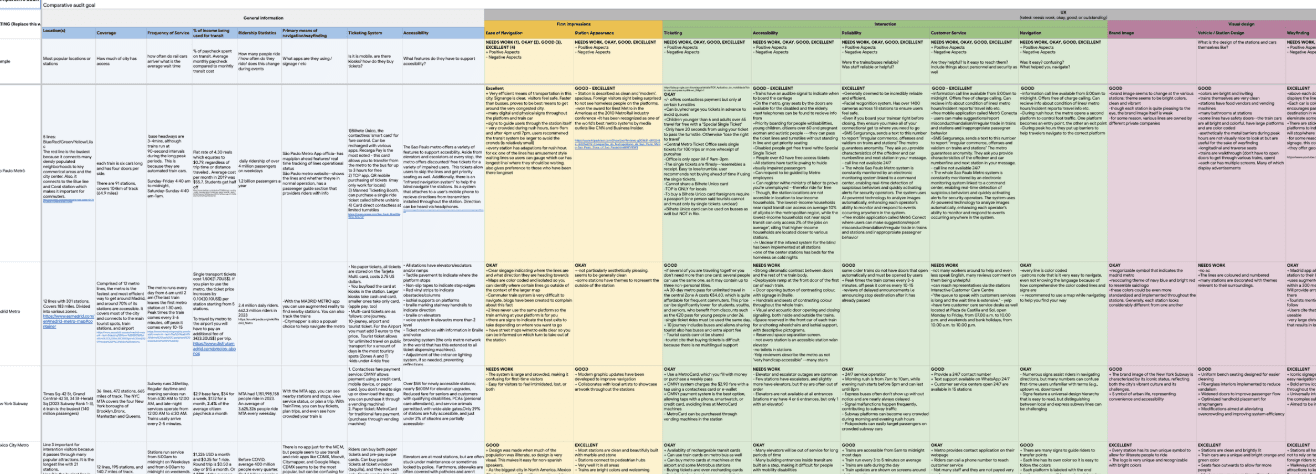
Once our research goals were clear, I helped lead a mixed-methods research effort (leading the development of the surveys and its analysis as well as identifying the competitors to do a comparative analysis) to understand how visitors want to envision their experience transit during major events.
Starting with a large-scale surveys and moving into interviews and fieldwork allowed the team to progressively narrow from behavior patterns to emotional drivers.
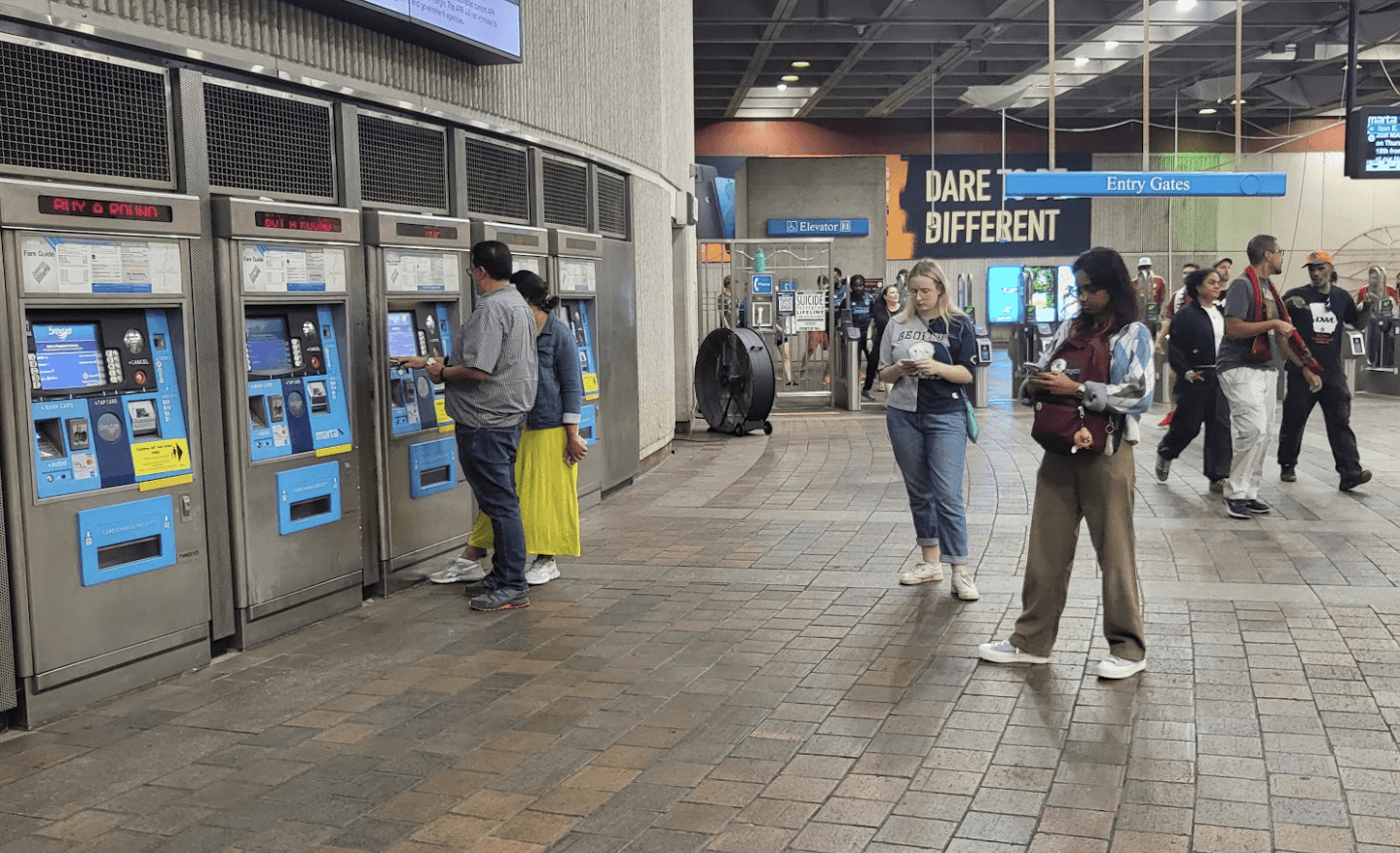
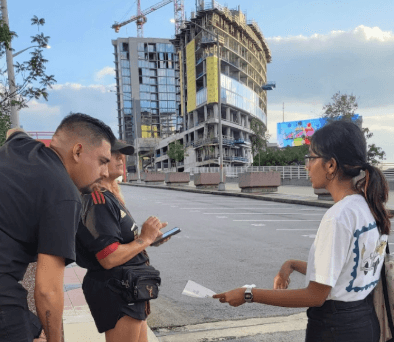
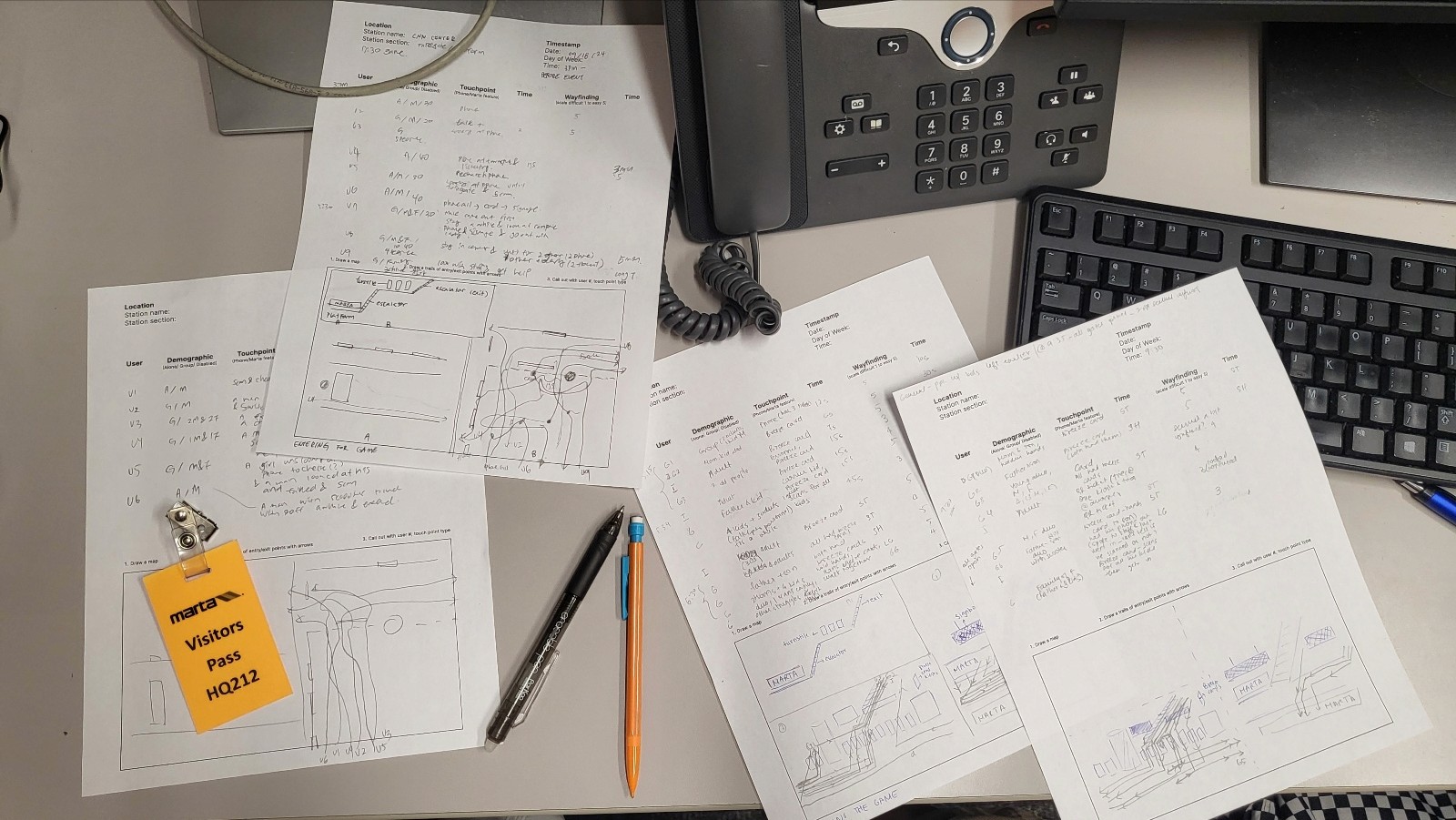
Surveys
Ethnographic Observations
Video Observations
Comparative Analysis
User Interviews



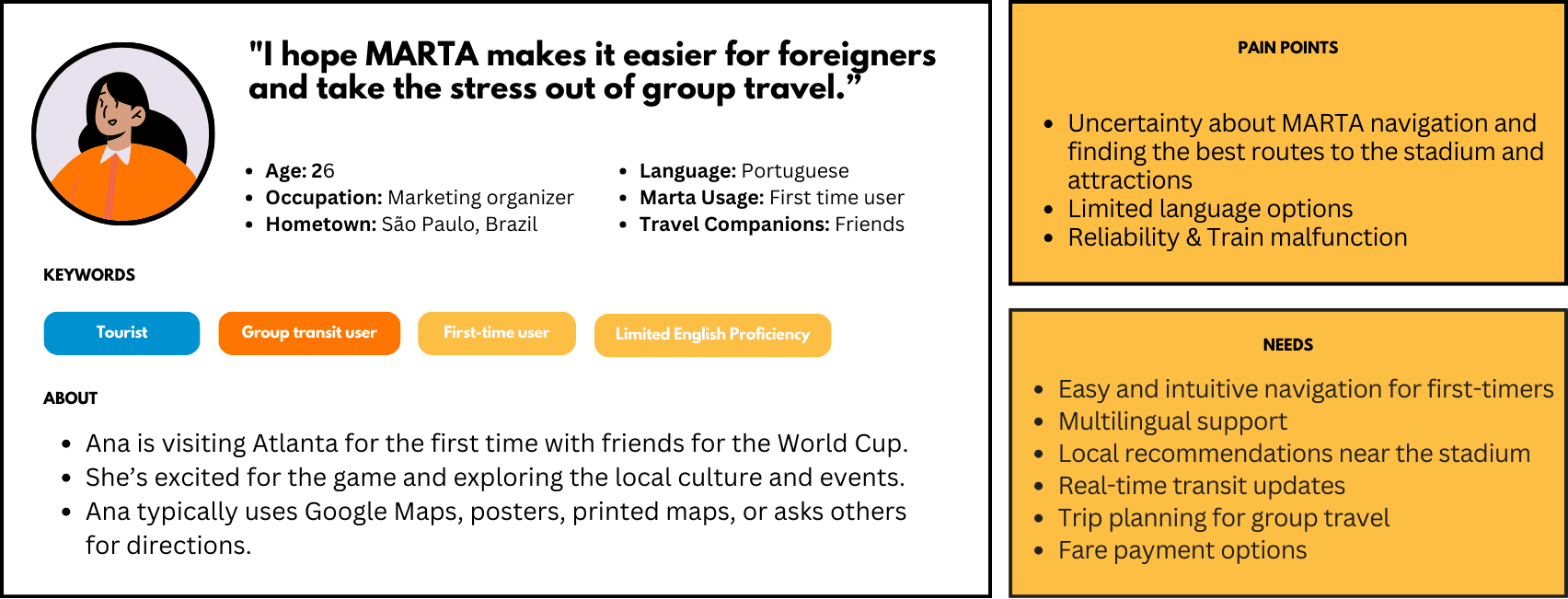
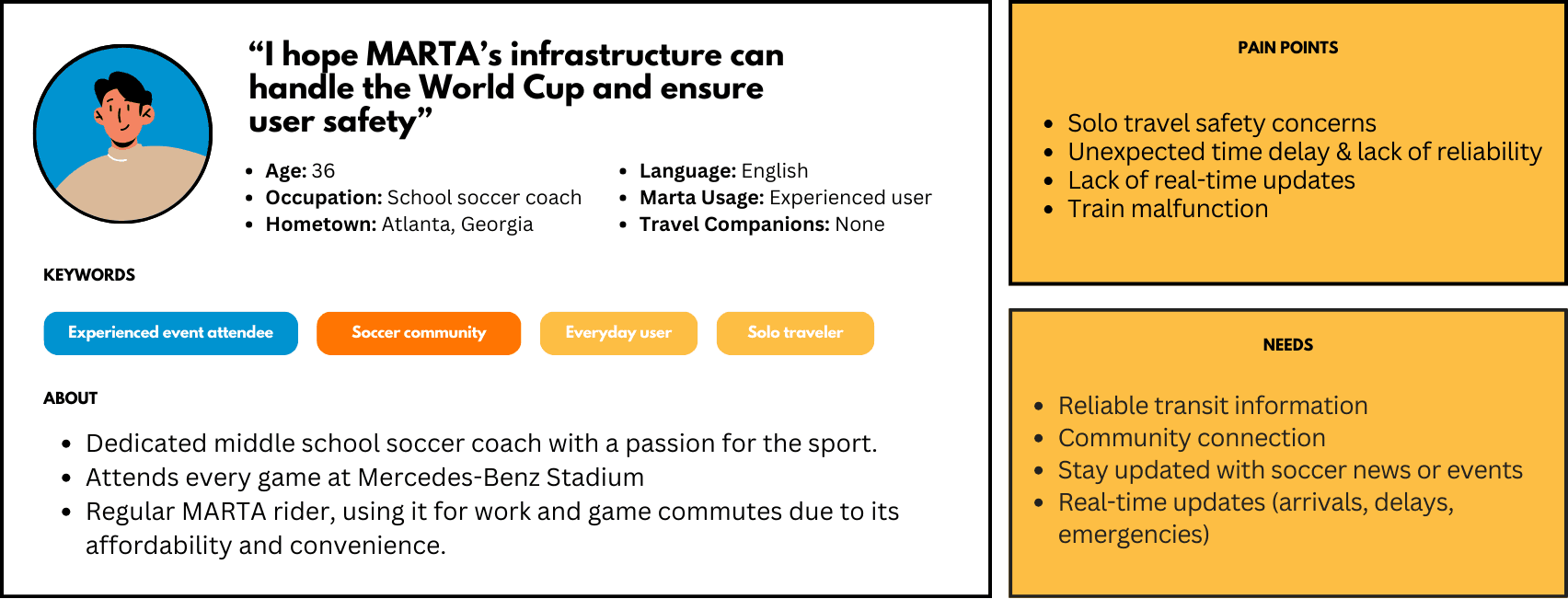
This sequencing revealed that most users weren’t just optimizing for speed. In fact, they were seeking reassurance through information, especially when traveling in groups or navigating unfamiliar terminology.
Additionally, ticketing was a major barrier in the user's journey. Therefore, we set out on the journey to design solutions for these answers to our research questions we found.

+
Learn more about my user-centered problem-solving
DESIGNING THE SOLUTION
We decided the features to focus by talking to stakeholders about MARTA's business goals and plans.
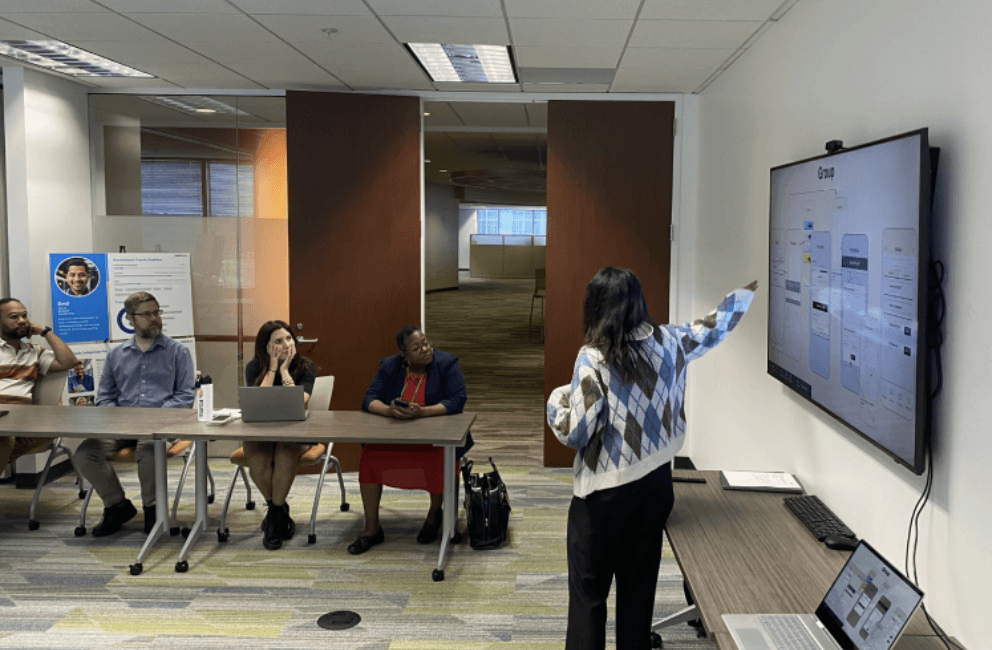
Brainstorming using Crazy-8s, we sought feedback from MARTA enthusiasts (yes, MARTA's own fanclub), the accessibility community and the MARTA committee at the headquarters themselves. Learning about their constraints, current projects and future vision allowed us to narrow our concepts into mere ideas ready for test, some of which in fact included consolidating their suite of applications into one!
One of our concepts was an AR feature, which MARTA mentioned is something in the works for them and that it can be very complex to implement at the moment.
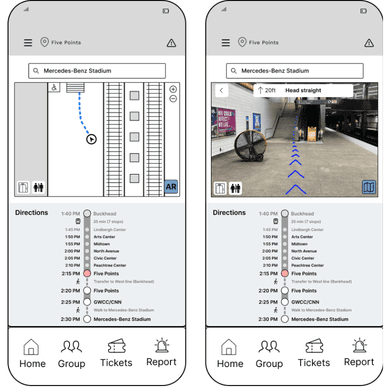
NOPE!
I played a key role in translating user needs and MARTA's business constraints as the lead UX designer for the project. For instance, reassurance was manifested in terms of clear & informative navigation, train schedules and even safety features.


Seeing as to how stressful group travel and ticketing were, I introduced group ticketing features where a user such as can have a dependent.

Translating these concepts into actual wireframes, we sought feedback in terms of both usability testing as well as heuristic evaluations with actual potential users (especially, those who were most likely to attend the FIFA World Cup in Atlanta).
Most of their confusion lied in the fact that MARTA jargon (such as Northbound and Southbound) was new to them and that navigation could be made simpler and more upfront.
The first round of usability testing revealed confusion in MARTA jargon and navigation.
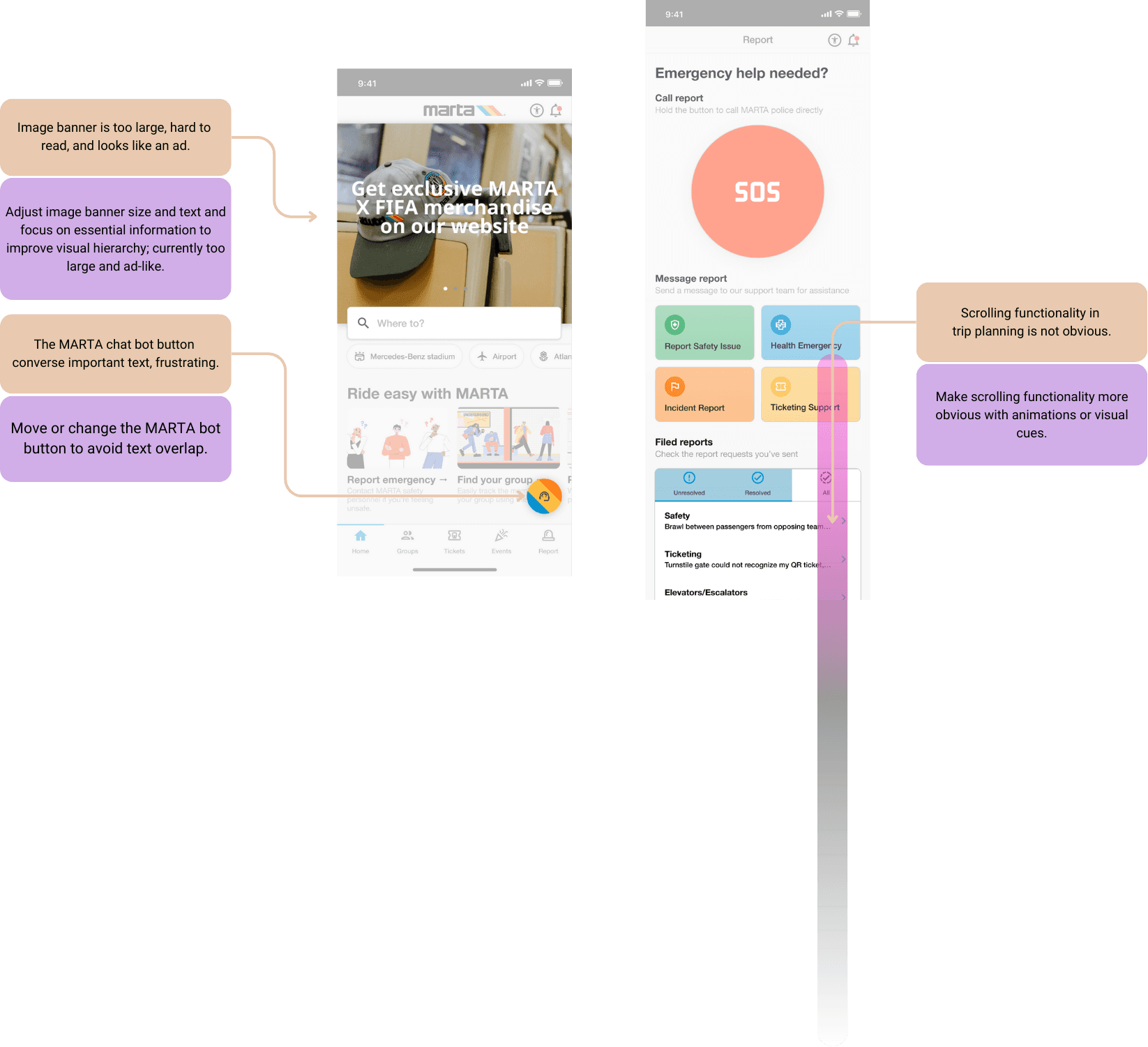
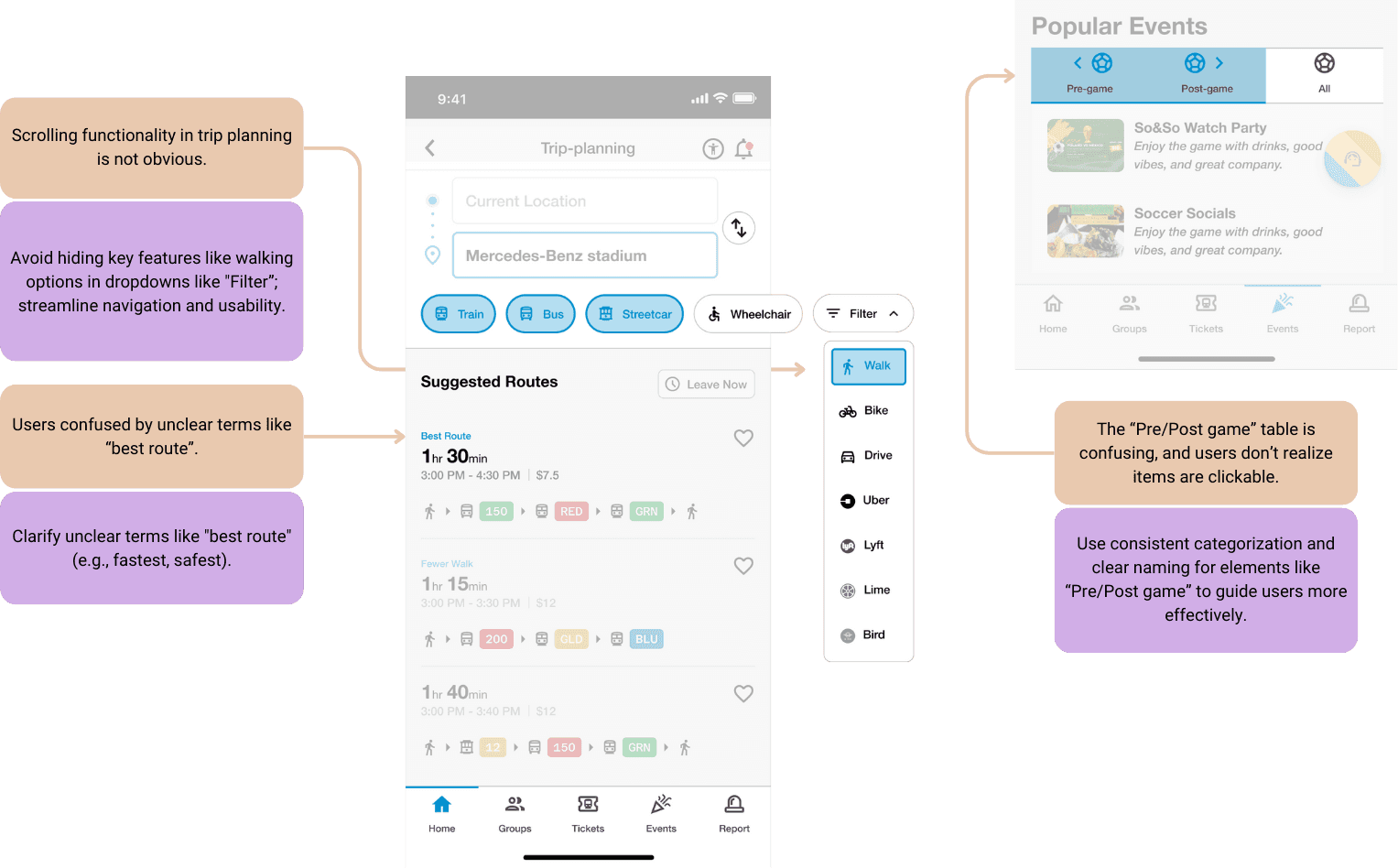
Once we had everything, we dived into designing the final high-fidelity wireframes and prototypes.
I was also responsible for setting up the design system where we chose to use MARTA's iconic Pantone Process Blue to offer users a sense of warmth, safety and trust while at the same time retaining MARTA's branding
DESIGN SYSTEM AND ROUND 2 OF WIREFRAME DESIGN
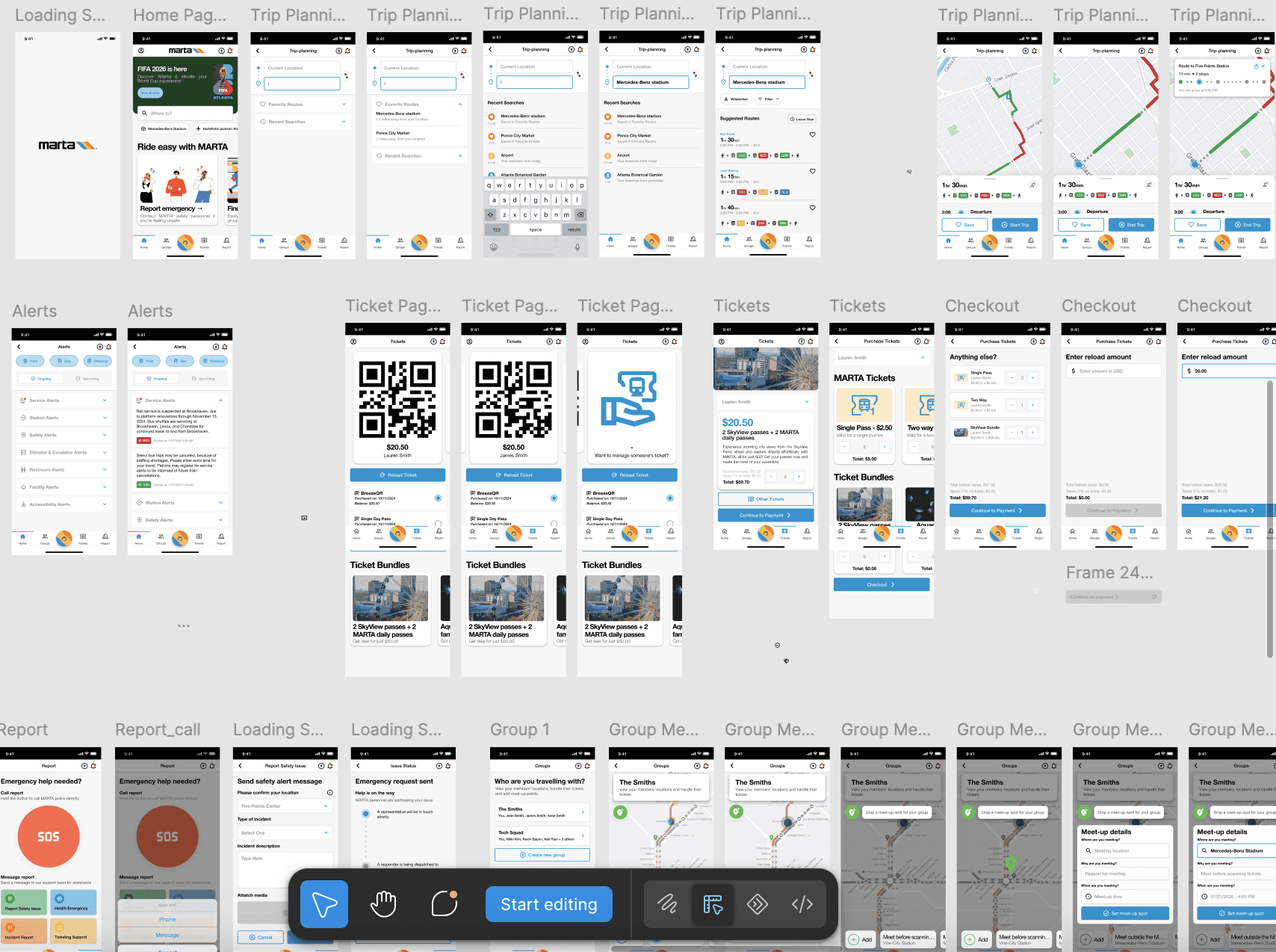
I laid the design system and led the design of high-fidelity interactive prototypes transforming the current experience to a proactive guide.
My focus was also on building a library of modular, flexible components including buttons, input boxes, and toggles utilizing Google’s Material Design icons to ensure universal clarity for international users. This foundation allowed me to construct high-fidelity prototypes that also integrated the MARTA Bot, shifting the app’s identity from a static utility into a proactive and conversational companion.
I was the lead in laying the groundwork for the project’s design system, recognizing MARTA’s long-term vision to eventually unify its fragmented digital tools into a single platform. To maintain instant recognizability while fostering a sense of warmth and safety, my teammate and I decided to leverage the official Pantone Process Blue as our primary anchor.


And voila! I designed the high-fidelity wireframes and prototypes based on the feedback we received while gearing up for our final stage of user testing.
+
Learn more about how I designed the solution
FINAL FEEDBACK SESSIONS AND EVALUATION
I facilitated a final round of usability testing and expert heuristic evaluation, achieving an 89% usability score on the Nielsen Scale, showing that even novice riders could navigate the system in under 3 minutes.
To close the loop, we conducted usability testing with participants matching our key personas to validate the design under pressure. This final check, combined with an expert heuristic evaluation, confirmed that our streamlined approach was successful. The results proved that our design allowed users to complete complex ticketing and navigation tasks with an 89% success rate and significant ease of use, effectively bridging the gap between Atlanta’s infrastructure and the intuitive experience global users expect.
FINAL PROTOTYPE
After the final rounds of iterations, I worked on designing the final prototype that you can interact with below.
REFLECTION
Focus on solving few problems well first before trying to solve everything at once.
I learnt a great deal through this project, especially just how deep user research can reveal many interesting aspects like the group travel problem!
But the most important thing that I learnt was how we need to constrain ourselves and not get carried away by trying to solve everything. At some point, we were trying to tackle a variety of pain points and while they were important we needed to keep business needs of MARTA as well as our resource constraints in mind.
Check out my other work below: